SDG 14 is to “conserve and sustainably use the oceans, seas and marine resources for sustainable development.”
Did you know…
Billions of people rely on oceans and their resources so it is important to conserve them and use the resources responsibly.

The acidity of the oceans has increased over the past thirty years. The oceans absorb and store carbon dioxide from the atmosphere which changes the chemical composition of the water. By the end of this century it is thought that the acidity of the oceans could increase even more.
Having more acidic oceans can be devastating for all marine life, for example, the coral bleaching (coral stress and possible death) in the Great Barrier Reef in Australia.
Targets
- “By 2025, prevent and significantly reduce marine pollution of all kinds, in particular from land-based activities, including marine debris and nutrient pollution.”
- “By 2020, sustainably manage and protect marine and coastal ecosystems to avoid significant adverse impacts… and take action for their restoration in order to achieve healthy and productive oceans.”
- “Minimize and address the impacts of ocean acidification, including through enhanced scientific cooperation at all levels.”
How chemistry can help
Chemistry is largely involved in the production of plastics and chemical companies are working with other distributors to prevent and reduce how much plastic waste ends up in the oceans (see SDG 12: Responsible Consumption and Production). Efforts are being made to clean up the plastics littering the oceans and studies can be done to see if plastics can be made more reusable or easier to degrade.
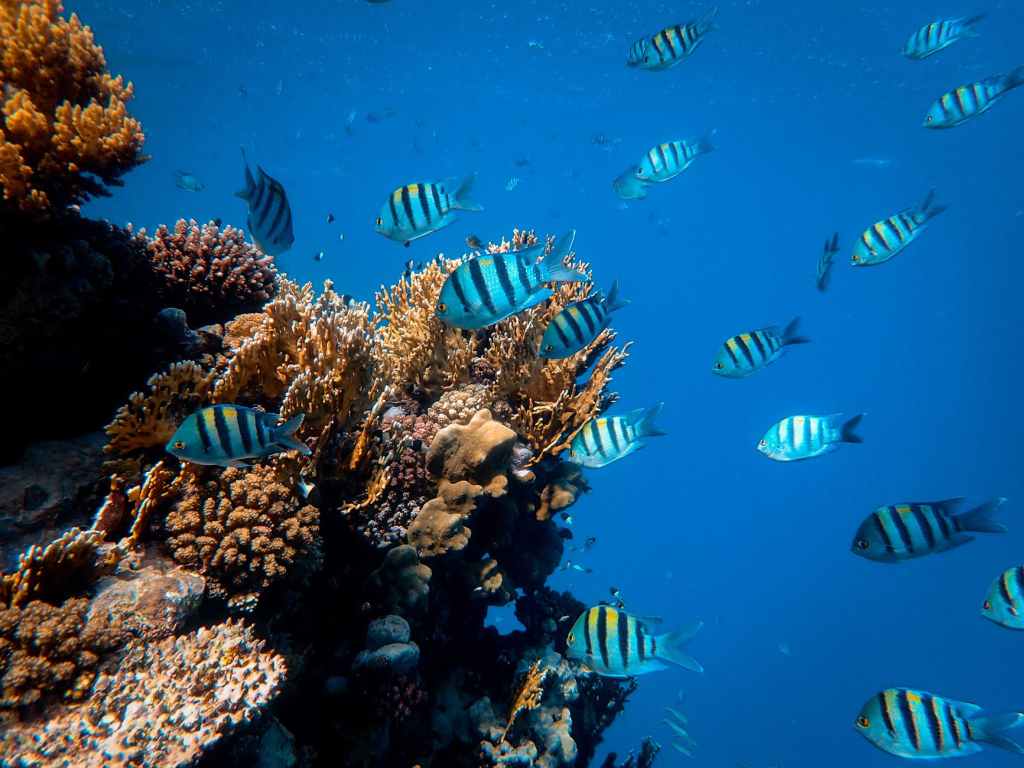
Studying chemistry also helps to have a better understanding of the process of ocean acidification and how those effects can possibly be reduced (see SDG 4: Quality Education). The oceans becoming more acidic would have serious consequences on marine life so it is an important issue.
 Chemistry and the UN Sustainable Development Goals