Who are we?
We are a project group in our final year studying chemistry at the University of Strathclyde. We have been researching how chemistry can contribute to reaching the United Nations Sustainable Development Goals. We worked together to research and put together this blog with the information we found. We would like to thank our supervisor, Dr Christine Davidson, for her support and assistance.
Beatrice Acklam, Sarah Laughtland, Holly Sheridan and Elli Soraruff
What are Sustainable Development Goals?
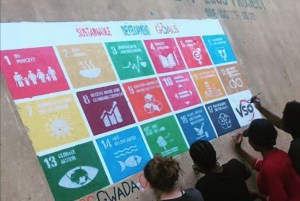
The United Nations (UN) members all agree that issues such as poverty, climate change and inequalities need to be tackled and can be tackled together as they often go hand in hand. From these issues 17 Sustainable Development Goals (SDGs) were developed to be reached by 2030. The goals are to be tackled by all UN member countries and have been developed in line with work already done and ongoing work carried out by the UN.
Why are they important?
The ultimate aim of the SDGs is to eradicate poverty, protect the environment and bring peace to the population. The goals were set so that they could be achievable. For example, it was calculated that it would cost $175 billion USD per year to end poverty. This sounds like a lot but actually it represents less than 1% of the combined income of the richest countries.

As you can see from the image on the left, each goal is connected to many others and they are all interlinked either directly or indirectly. For example, having an education (SDG 4), can increase the chance of someone escaping poverty (SDG 1), which can therefore reduce the hunger (SDG 2) of this person and their family. There are many ways in which the goals interlink and you will be able to see these more clearly in our blog posts for each of the goals.
How can chemistry help?
Chemistry is everywhere. Whether you realise it or not, it affects all parts of your life. The chemical industry has created more than 20 million jobs worldwide both directly and indirectly. Chemistry plays a role in sustainable food production; in the creation of new pharmaceuticals to improve human health; in the construction industry; in environmental protection; and in many more areas that you might not have initially realised. Read our blogs for more…
We hope you enjoy our blog!
For more information please visit the UN website
 Chemistry and the UN Sustainable Development Goals