SDG 8: Decent Work and Economic Growth

SDG 8 is to “promote sustained, inclusive and sustainable economic growth, full and productive employment and decent work for all.”

Did you know…

In many areas around the world, there are people working in unsafe environments. A recent investigation into 55 countries found that there were 3 deaths per 100,000 employees and around 889 non-fatal injuries per 100,000 people, this was due to unsafe working conditions.

New York City © Holly Sheridan

Unemployment is a concern, also. A fifth of the world is not in education so are not gaining any knowledge or skills (see SDG 4: Quality Education). As a result of this, youth unemployment is considerably higher than adult unemployment. The number of women in work is half of that of the number of men (see SDG 5: Gender Equality).

Targets

  • “Sustain per capita economic growth in accordance with national circumstances and, in particular, at least 7% gross domestic product growth per year in the least developed countries.”
  • “Improve progressively, through 2030, global resource efficiency in consumption and production and endeavour to decouple economic growth from environmental degradation… with developed countries taking the lead.”

How chemistry can help

This may be a less obvious goal that chemistry is related, but it really is. The chemical industry is massive so creates millions of jobs around the world. According to the European Chemical Industry Council, the chemical industry contributes $5.7 trillion dollars to the world GDP. As it is such a broad industry, it links to almost all other industries, this value accounts for the direct and indirect contributions.  
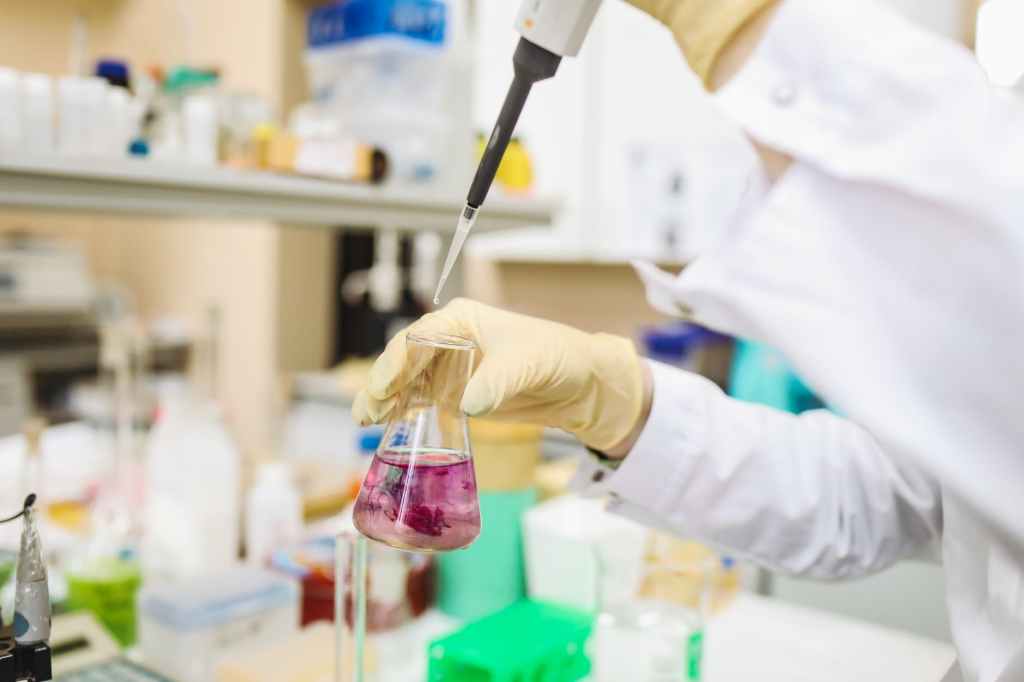
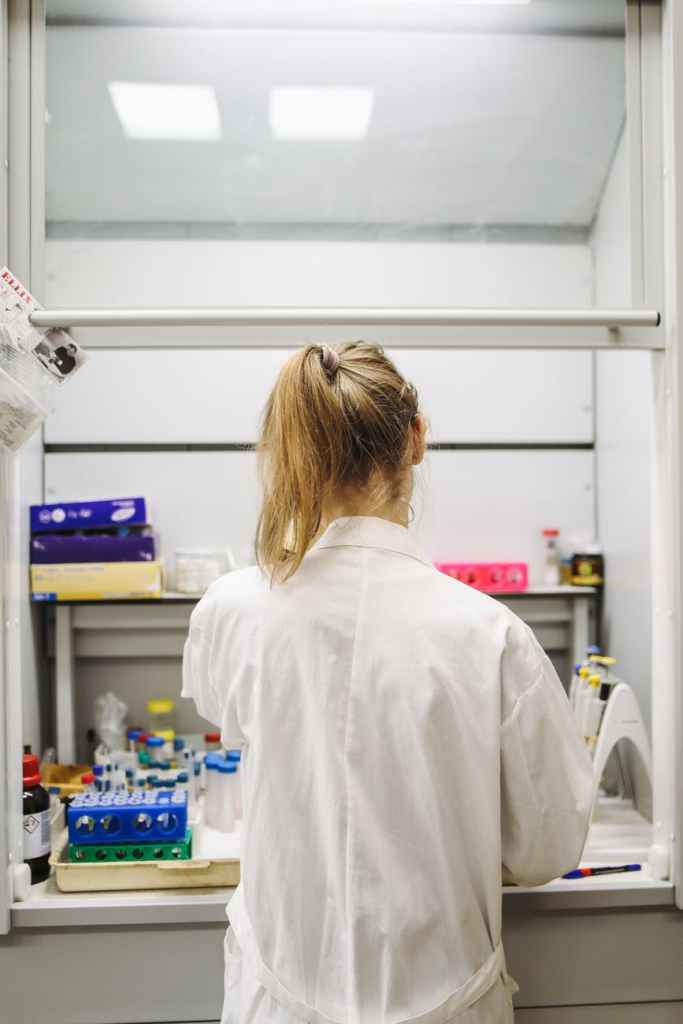
Photo by Polina Tankilevitch on Pexels.com

Many chemical companies put health and safety at the heart of their work. They provide sufficient equipment and procedures to ensure their safety, which is beneficial to both the employees and meeting this goal. If employees are healthy, they can continue to work well which benefits them (see SDG 1: No Poverty) and also the economy. 

SDG 7: Affordable and Clean Energy

SDG 7 is to “ensure access to affordable, reliable, sustainable and modern energy for all.”

Did you know…

Approximately 800 million people do not have access to electricity or good access to clean cooking fuels or technology.

In 2017, 89% of the world’s population had access to electricity.

Approximately 3 billion people worldwide use inefficient and polluting cooking systems.

Nigerian sunset © Sarah Laughtland

Renewable energy makes up only 17.5% (2016) of total final energy consumption. This needs to be much higher to meet goals set. Money to support the development of clean energy systems in developing countries was approximately $18.6 billion in 2016                                                                    

Renewable energy progress: Australia has the world’s largest lithium-ion battery. With 50% of the energy used in South Australia comes from wind and solar power.

Efficiency progress: the Hungary government set up a programme called “Warmth of Homes” which has improved the energy efficiency of homes, installed renewable energy systems and modernised homes to reduce heat loss etc. The programme has reduced carbon dioxide emissions by 99,000 tons/year and made energy savings of 260 million kWh/year.

Targets

  • “By 2030, ensure universal access to affordable, reliable and modern energy services.”
  • “By 2030, increase substantially the share of renewable energy in the global energy mix.”
  • “By 2030, double the global rate of improvement in energy efficiency.”
  • “By 2030, enhance international cooperation to facilitate access to clean energy research… and promote investment in energy infrastructure and clean energy technology.”
  • “By 2030, expand infrastructure and upgrade technology for supplying modern and sustainable energy services for all… in accordance with their respective programmes of support.”

How Chemistry Can Help

The chemical industry is supporting this goal by ensuring the energy used at their sites is sustainable and efficient. They are also creating products for mainstream consumers to use energy more efficiently. The industry has a big impact on the renewable energy sector. It is involved in the production and storage of renewable energy and infrastructure for renewable energy. They make parts for wind turbines and solar panels. 

Solar panels are a huge part of providing renewable energy across the world. There are different types of solar panels available with one of the main types being dye-sensitized solar cells (DSSCs).  

Photo by Pixabay on Pexels.com

There are some issues associated with DSSCs such as efficiency and charging. New developments in hollow nanostructures (a material of nanoscale size which has space inside it) are helping to solve these issues. Using the hollow nanostructures means the efficiency of capturing light for energy is much greater because of the way they are built and the properties they have.

Chemistry can directly help the energy industry become more sustainable and renewable by researching and developing new materials (see SDG 8: Decent Work and Economic Growth).

In Senegal, a project was undertaken to replace inefficient light bulbs with LED lights. The replacements were to take place in people’s homes, public streets and government offices. This is a great project to help tackle climate change as LED lights use between 80-92% less electricity than incandescent lights. (see SDG 13: Climate Action).

SDG 6: Clean Water and Sanitation

SDG 6 is to “ensure availability and sustainable management of water and sanitation for all.”

Did you know…

In 2015, 2.1 billion people did not have access to safe water at home. Of these people, 263 million take more than half an hour to collect this water. It’s estimated that 159 million people drink from streams, lakes or other surface water. This is a real issue as water can be contaminated and cause diseases such as cholera, and can result in hundreds of thousands of deaths every year (see SDG 3: Good Health and Wellbeing). 

It is thought that about a third of countries have medium or above levels of water shortage. These countries are predominantly in North African and West, Central and South Asia which struggle to supply fresh water for parts of the year. 

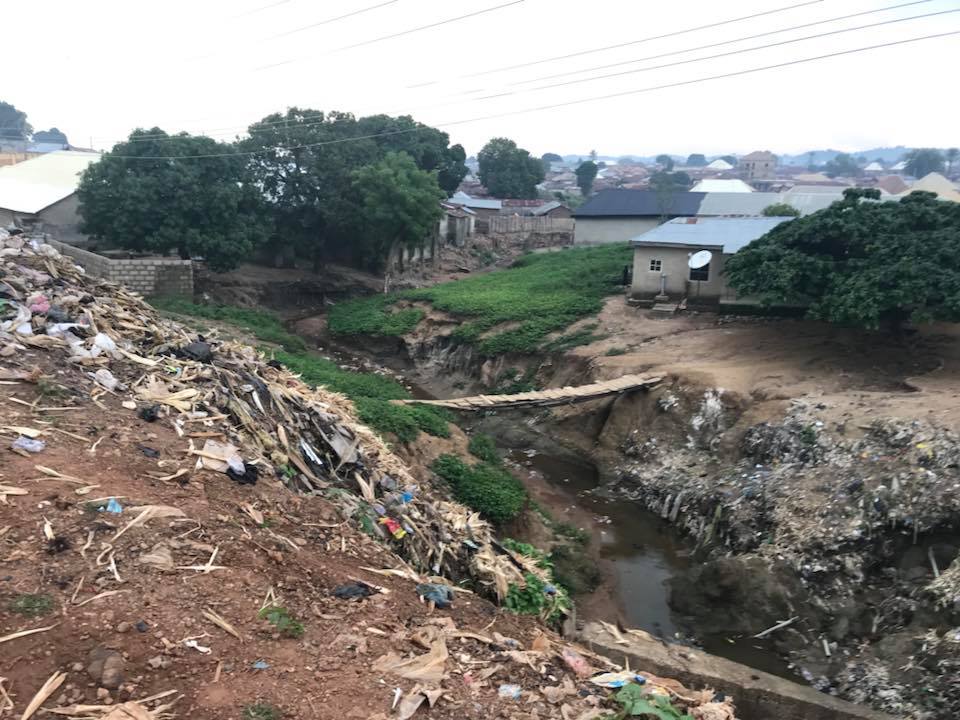
Rural Nigerian village © Sarah Laughtland

Sanitation relates to clean drinking water and disposal of sewage. Despite the progress made, billions of people still lack clean, safe water. There are 4.5 billion people who live without toilets that can safely remove their waste in their homes. That’s more than half of the world!  Around 701 million people were still defecating publicly in 2017, which obviously causes a lot of bacteria and diseases introduced into water systems. 

Globally, 60% of people across the world have access to basic hand washing facilities at home, this decreases to 38% in the least developed countries. This means that there are around 3 billion people who do not have soap and water at home!

Targets

  • “By 2030, achieve universal and equitable access to safe and affordable drinking water for all.”
  • “By 2030, improve water quality by reducing pollution, eliminating dumping, and minimising release of hazardous chemicals and materials halving the proportion of untreated wastewater and substantially increase recycling and reuse globally.”
  • “By 2030, expand international cooperation and capacity building support to developing countries in water- and sanitation-related activities and programmes…”

How chemistry can help

Sometimes hazardous chemicals can end up in wastewater that can be let out into the environment. Chemistry is responsible for removing these contaminants. It can also help before the waste has been released, it can react with what would have been the waste and take out toxic products before they enter the water system. 

Waterfall in Greece © Elli Soraruff

Water treatment is also important to ensure it is safe to drink, again, this is chemistry’s responsibility. Analytical techniques are used to test what is present in the water and chemicals can be added to bind to the harmful contaminant to remove them. 

Chemistry is responsible for the development for disinfectants to kill germs that can be in the water, the pipes that the water has to travel through may also be contaminated so they can be coated to kill any bacteria or infections that could have made its way into the water before it reaches the tap. 

The simplest way of sanitising an area with regards to sewage would be educating people on the harmful effects of defecating in or near water supplies. However this is not always possible (see SDG 4: Quality Education).

SDG 5: Gender Equality

SDG 5 is to “achieve gender equality and empower all women and girls.”

Did you know…

There has been difficulty achieving the goal because of: legal discrimination against women, social attitudes not changing, sexual and reproductive issues not being resolved and low levels of political representation/participation of women.

Child marriage is slowly reducing but is reducing at a slower rate in sub-Saharan Africa.

Approximately 200 million girls and women are subjected to female genital mutilation (FGM) (based on 30 countries). However, this statistics is just from countries that can provide data and the real number could be much higher.

When a country has a law for more equal representation of women in politics, the actual proportion of women represented is much higher than in countries with no laws for this. 

 First female class of astronauts (1976)
Image courtesy of NASA

In 2018, 39% of the world’s employment was women. In 2015 it was 26%. Women do three times as much unpaid domestic and care work as men.

In many countries there are gaps in the law on: violence against women, employment for women and economic benefits for women.

Targets 

  • “End all forms of discrimination against all women and girls everywhere.”
  • “Eliminate all forms of violence against all women… and other types of exploitation.”
  • “Eliminate all harmful practices, such as child, early and forced marriage and female genital mutilation.”
  • “Ensure women’s full and effective participation and equal opportunities for leadership at all levels of decision-making in political, economic and public life.”
  • “Adopt and strengthen sound policies and enforceable legislation for the promotion of gender equality and the empowerment of all women and girls at all levels.” 

How Chemistry Can Help

The chemical industry is supporting women in achieving full gender equality by creating and delivering programmes and management techniques to guarantee equality.

Furthermore, within the chemical industry, products are being made specifically to support and improve women’s health. For example, food fortification, which involves adding nutrients to food products.  Many women do not get enough iron, folate, vitamin B-12 and many more. 

In Tanzanian women there is a vitamin and mineral deficiency issue. These deficiencies, including iron and vitamin A, have a serious impact on maternal health and cognitive development in women of a reproductive age (18-49). It also negatively  impacts Tanzania’s economy. Due to these issues, Tanzania made it compulsory to fortify wheat, maize flour, salt and cooking oil (see SDG 2: Zero Hunger).

Photo by Polina Tankilevitch on Pexels.com

A company called Schlumberger, which provides products and services for the oil and gas industry, have set up a foundation to promote science and technology education. Within the Schlumberger Foundation, a programme called Faculty for the Future was created. This programme is about getting more women into science, technology, engineering and maths (STEM) careers. Almost 180 fellowships have been granted by the foundation for women from different developing countries. 

SDG 4: Quality Education

SDG 4 is to “ensure inclusive and equitable quality education and promote lifelong learning opportunities for all.”

Did you know…

Education is arguably the most important tool in societies. A good education allows people to get involved in social and political matters and understand the issues of today’s world. Despite its importance, not everyone has access to to school. Such as the 262 million children and young people between the ages of 6 and 17 who did not have access to school in 2017. More than half of children and adolescents are not meeting the minimum proficiency standards in reading and mathematics. The capacity of teachers, the learning environment and the quality of education have not kept up with the needs of the population. There is a big need to improve this situation especially for women, girls and marginalised people in vulnerable situations. 

Children in crowded classroom © Sarah Laughtland

Where there is no quality education or no education at all, there is a tendency towards poverty, racism, sexism, war, financial problems, less development, problems in the health care system, etc. 

Targets

  • “By 2030, ensure that all girls and boys complete free, equitable and quality primary and secondary education leading to relevant and effective learning outcomes.”
Boys posing for picture © Sarah Laughtland
  • “By 2030, ensure equal access for all women and men to affordable and quality technical, vocational and tertiary education, including university.”
  • “By 2030, substantially increase the number of youth and adults who have relevant skills, including technical and vocational skills, for employment, decent jobs and entrepreneurship.”
  • “By 2020, substantially expand globally the number of scholarships available to developing countries for enrolment in higher education, including vocational training and information and communications technology, technical, engineering and scientific programmes, in developed countries and other developing countries.”

How Chemistry Can Help 

Chemical companies can contribute to quality education by promoting science education through charitable investments such as providing books, teaching equipment or scholarships. Also, they can undertake initiatives in specific regions or populations, such as technical programs and apprenticeships, which will help to improve professional skills and employment prospects for local people.

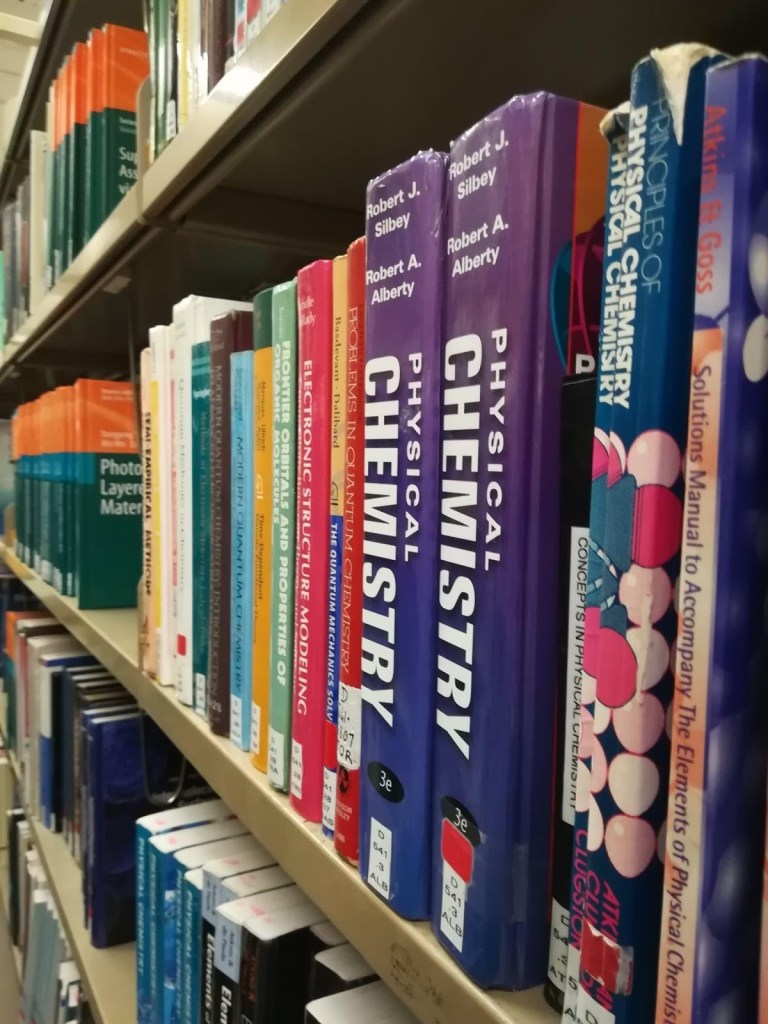
Physical chemistry textbooks in University of Strathclyde Library © Elli Soraruff

Moreover, chemistry in schools can help children to understand the global issues that we are facing from a scientific aspect and thus it can inspire them to take actions and even become chemists or scientists and try to find solutions to the big problems we are facing as humanity (see SDG 1, SDG 2, SDG 3, SDG 5, SDG 6, SDG 7, SDG 8, SDG 9, SDG 10, SDG 11, SDG 12, SDG 13, SDG 14, SDG 15, SDG 16).

Education is power, and power is change. Quality Education is so important and it can be linked to ALL the SDGs!

SDG 3: Good Health and Wellbeing

SDG 3 is to “Ensure healthy lives and promote well-being for all at all ages.”

Did you know…

Only 59% of births in areas in Africa below the Sahara were attended by someone trained on giving birth. Globally, there has been an increase in the number of people who have received vaccinations. However, there are still millions without access to even basic healthcare. There has also been more development with the prevention, testing and treatment of the HIV virus. This has meant there has been a decline in cases by 37%.

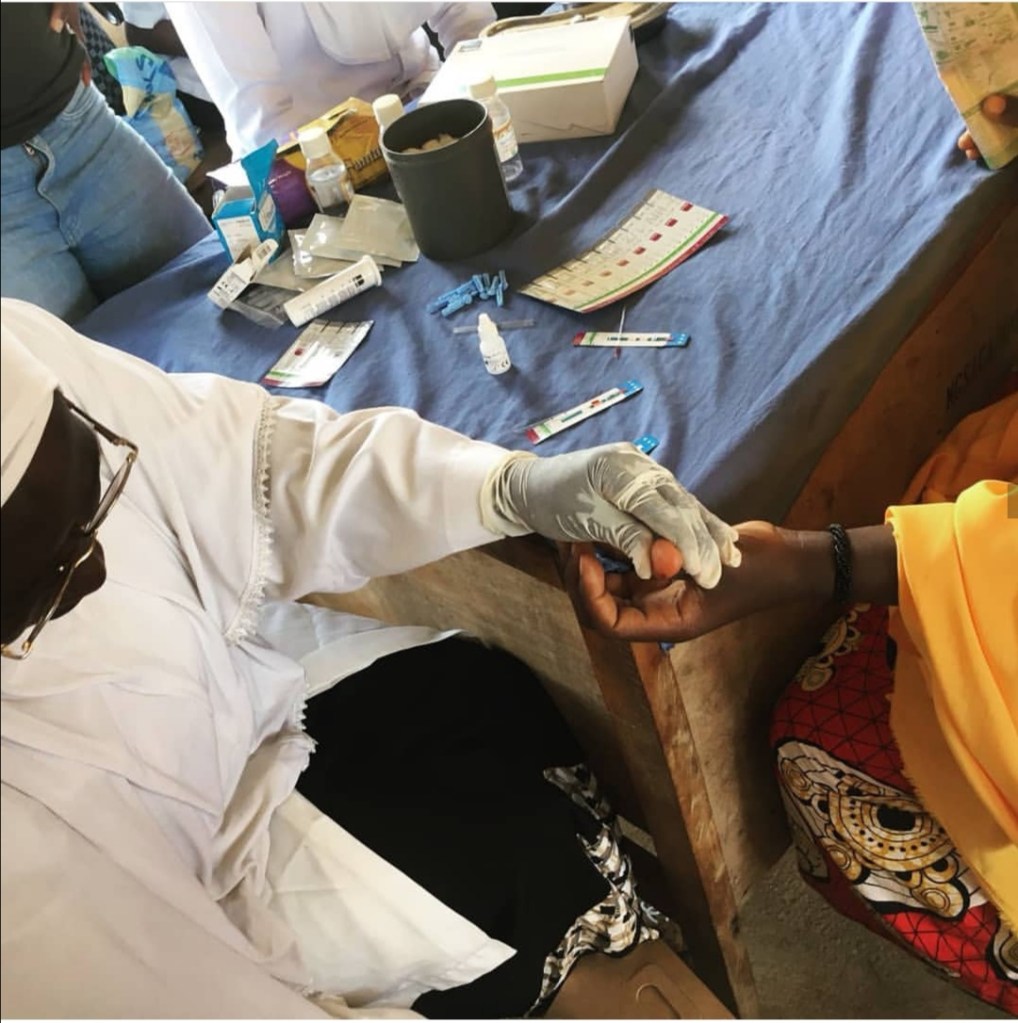
Pop up HIV testing in rural Nigerian town © Sarah Laughtland

There is an increased risk of cardiovascular and respiratory diseases as a result of air pollution, causing 7 million deaths globally in 2016. This is particularly of concern in areas that still cook using fuels that are pollutants, such as cooking on a fire.

Unclean drinking water affects the health of millions, this is heavily linked with SDG 6: Clean Water and Sanitation. Diarrhoea, infections from soil-transmitted parasitic worms and protein-energy malnutrition has caused 870,000 deaths per year. 

Targets

  • “By 2030, end the epidemics of AIDs, tuberculosis, malaria, and neglected tropical diseases and combat hepatitis, waterborne diseases and other communicable diseases.”
  • “By 2030, substantially reduce the number of deaths from hazardous chemicals and air, water and soil pollution and contamination.”
  • “Support the research and development of vaccines and medicines for the communicable and non-communicable diseases that primarily affect developing countries, provide access to affordable essential medicines and vaccines… to protect public health, and, in particular, provide access to medicines for all.”

How chemistry can help

Image of meat being sold for Eid © Sarah Laughtland

Chemistry plays an important role in drug development. Also making the drug effective to the desired use as well as cost effective so that it can be accessed by even the poorest people can be somewhat controlled by chemistry. Even the testing for some infections or viruses can be linked back to chemistry. For example, the strips that can be used to test for HIV use a chromatographic technique to test for positive or negative results. 

Having access to education (see SDG 4: Quality Education), in particular science, can prepare people for a future career in healthcare. This could increase the number of birth attendants who are knowledgeable on the treatment of both the mother and baby. It may mean that access to healthcare can be made easier if there are an increased number of people trained in treatment of some illnesses. 

Chemical waste can be released into the environment through air and water, from which it can end up in peoples food or drinking water. This is obviously of serious concern as it can affect health. It is therefore the responsibility for large industrial plants, particularly chemical plants, to develop ways to dispose of their waste responsibly and also to minimise their impact by reducing, reusing or recycling materials.

SDG 2: Zero Hunger

SDG 2 is to “End hunger, achieve food security and improved nutrition and promote sustainable agriculture.”

Did you know…

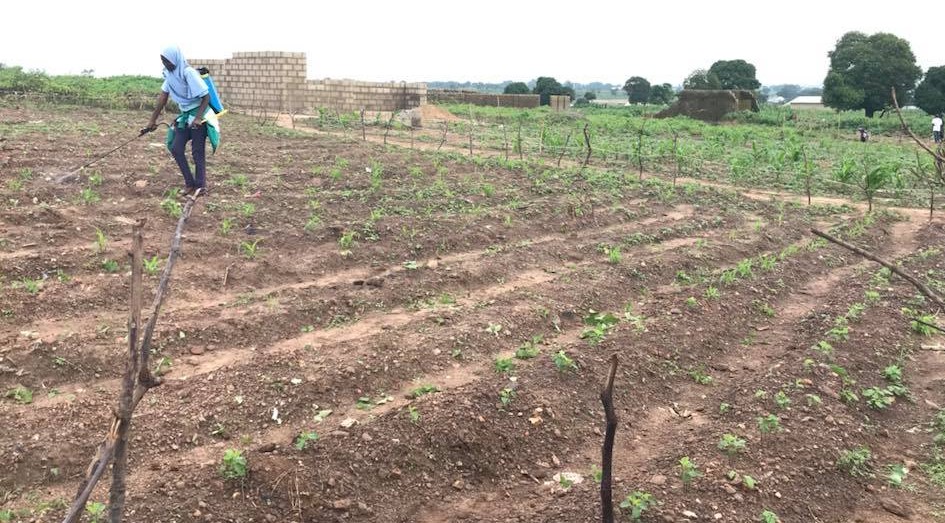
Girl spreading insecticide on crops © Sarah Laughtland

Millions of people around the world are affected by hunger and malnourishment, and this number is increasing due to the rising population. In 2017, approximately 1 in 9 people were undernourished around the world – 821 million in total.

Targets

  • “By 2030, ensure sustainable food production systems and implement resilient agricultural practices that increase productivity and production, that help maintain ecosystems, that strengthen capacity for adaptation to climate change, extreme weather, drought, flooding, and other disasters and that progressively improve land and soil quality.”
  • “By 2020, maintain the genetic diversity of seeds, cultivated plants, and farmed and domesticated animals and their related wild species, including through soundly managed and diversified seed and plant banks… and promote access to fair and equitable sharing of benefits arising from utilisation of genetic resources and associated traditional knowledge, as internationally agreed.” 

How chemistry can help

Photo by Polina Tankilevitch on Pexels.com

These targets can be met with the assistance of chemistry. Fertilisers, herbicides, and insecticides can be an essential tool in a successful farm. So access to them, and training in their correct use is important. The chemistry of these products can influence their cost. This may result in small scale farmers in less developed countries being restricted in their ability to purchase these products. Chemistry can play a role in creating compounds that are efficient in carrying out the desired effect whilst being cost effective. When farmers can afford to buy them they can create a higher crop yield with better quality and therefore can make more money. If farmers can gain a higher income, they can create a better life for themselves and their family, for example they may earn enough to send their children to school (see SDG 4: Quality Education).

Genetic modification of seeds or animals can make crops resilient or make them grow in harsher conditions. In order to modify these seeds or animals, biochemical interactions within the cells must be known and understood so that they can be altered. Many food companies have taken to fortifying their products with additional nutrients. This is particularly helpful for people who cannot otherwise get all the sufficient nutrients (see SDG 5: Gender Equality).

SDG 1: No Poverty

SDG 1 is to “end poverty in all its forms everywhere.”

Did you know…

Poverty can cause violent conflicts, vulnerability to disasters, and deprivation. In 2018, 8.6% of the global population experienced extreme poverty. 

Children caught in the rain © Sarah Laughtland

In 2020, we are developing more and more advanced technologies. You would think therefore that poverty should be greatly reduced, or even eliminated completely. However, the goal that the United Nations has set to be achieved by 2030 does not seem as likely to be reached. 

The aim set by the UN is to achieve less than 3% of the world living in extreme poverty by 2030. However, it’s been estimated that by 2030 6% of the global population will be still living in poverty.

Targets

  • “By 2030, reduce at least by half the proportion of men, women and children of all ages living in poverty in all its dimensions according to national definitions.”
  • “By 2030, ensure that all men and women, in particular the poor and the vulnerable, have equal rights to economic resources, as well as access to basic services, ownership and control over land and other forms of property, inheritance, natural resources, appropriate new technology and financial services, including microfinance.”
  • “By 2030, build the resilience of the poor and those in vulnerable situations and reduce their exposure and vulnerability to climate-related extreme events and other economic, social and environmental shocks and disasters.”

How Chemistry can help 

The chemical sector could help to solve poverty by creating new jobs with living wages and benefits for the employees. Almost 20 million people are employed directly or indirectly by the chemical industry; more than 96% of all manufactured goods are affected by chemistry. Moreover, that gives the opportunity for new investments and partnerships. Furthermore, the chemical companies could improve infrastructure and thus, strengthen communities. Finally, in this way economies could grow in countries where the need is greatest through innovative products which are aiming to support an affordable and accessible shelter and other basic goods (see SDG 8: Decent Work and Economic Growth).

Boy playing with tyre © Sarah Laughtland

Chemistry has helped to eradicate deadly diseases allowing people to live longer and better (see SDG 3: Good Health and Wellbeing).

Chemical technologies enable water conservation and reuse, and the transformation of contaminated water into clean, safe water (see SDG 6: Clean Water and Sanitation).

Introduction to Our Work

Who are we?

We are a project group in our final year studying chemistry at the University of Strathclyde. We have been researching how chemistry can contribute to reaching the United Nations Sustainable Development Goals. We worked together to research and put together this blog with the information we found. We would like to thank our supervisor, Dr Christine Davidson, for her support and assistance.

Beatrice Acklam, Sarah Laughtland, Holly Sheridan and Elli Soraruff

What are Sustainable Development Goals?

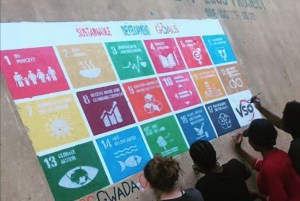
Volunteers painting SDG mural at a school © Sarah Laughtland

The United Nations (UN) members all agree that issues such as poverty, climate change and inequalities need to be tackled and can be tackled together as they often go hand in hand. From these issues 17 Sustainable Development Goals (SDGs) were developed to be reached by 2030. The goals are to be tackled by all UN member countries and have been developed in line with work already done and ongoing work carried out by the UN.

Why are they important?

The ultimate aim of the SDGs is to eradicate poverty, protect the environment and bring peace to the population. The goals were set so that they could be achievable. For example, it was calculated that it would cost $175 billion USD per year to end poverty. This sounds like a lot but actually it represents less than 1% of the combined income of the richest countries.

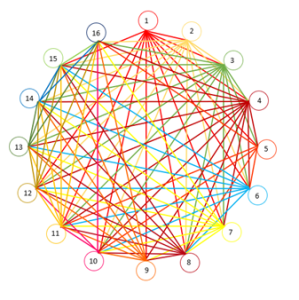
Links between SDGs © Sarah Laughtland

As you can see from the image on the left, each goal is connected to many others and they are all interlinked either directly or indirectly. For example, having an education (SDG 4), can increase the chance of someone escaping poverty (SDG 1), which can therefore reduce the hunger (SDG 2) of this person and their family. There are many ways in which the goals interlink and you will be able to see these more clearly in our blog posts for each of the goals.

How can chemistry help?

Chemistry is everywhere. Whether you realise it or not, it affects all parts of your life. The chemical industry has created more than 20 million jobs worldwide both directly and indirectly. Chemistry plays a role in sustainable food production; in the creation of new pharmaceuticals to improve human health; in the construction industry; in environmental protection; and in many more areas that you might not have initially realised. Read our blogs for more…

We hope you enjoy our blog!

For more information please visit the UN website

Design a site like this with WordPress.com
Get started